
Veteran Suicide Deaths Increased
6,488 veterans died by suicide in 2024, compared with 6,398 in 2023. The average increased from 17.5 to 17.7 deaths per day.

The Crisis
Understanding the Veteran Suicide Crisis and How We Can Prevent It
The 16,000+ figure on our homepage comes from America's Warrior Partnership's Operation Deep Dive research. It is a yearly estimate of former service members who die by suicide or self-injury mortality, extrapolated nationally from five years of data in eight states. It is broader than the VA's official count of 6,488 veteran suicide deaths in 2024. See why the two figures differ.
These numbers describe the scale of loss. They do not measure the results of any single program. Red Star Foundation responds to that loss through connection: the Peer-to-Peer Network, family stories shared through Red Star Voices, the Red Star Service Banner, and ongoing support for Red Star Families.
Veteran suicide remains one of the most serious challenges facing America's veteran community. Thousands of veterans die by suicide every year, leaving behind families, friends, fellow veterans and communities forever changed by their loss.
According to the U.S. Department of Veterans Affairs' 2026 National Veteran Suicide Prevention Annual Report, released September 30, 2026, 6,488 veterans died by suicide in 2024, an average of approximately 17.7 deaths every day. This represents an increase from 6,398 deaths and 17.5 per day in 2023.
Although these numbers are deeply concerning, they tell only part of the story. Independent research from America's Warrior Partnership suggests that the broader number of former service member deaths involving suicide and self-injury mortality may be considerably higher.
Understanding these findings, the differences in reporting methods, and the importance of community-based veteran suicide prevention is essential to addressing this national crisis.
For years, Americans have heard figures such as 17 veteran suicides per day, 22 veteran suicides per day and, more recently, 44 veteran suicides per day. These numbers come from different time periods, methodologies and definitions. Understanding those differences is important to understanding the true scope of the veteran suicide crisis.
At Red Star Foundation, our mission is to help prevent suicide among current military, veterans, and first responders while providing hope, recognition and connection to the families left behind.
Veteran suicide prevention requires more than responding when someone reaches a crisis point. It requires connection, early intervention, trusted peer relationships, stronger communities and a willingness to have conversations that may save a life.
The data
People searching for veteran suicide statistics 2026 should understand that national suicide mortality reporting is delayed because death records must be collected and verified across the country. The most current nationwide veteran suicide data comes from the Department of Veterans Affairs' 2026 National Veteran Suicide Prevention Annual Report, published September 30, 2026, and covers deaths occurring in 2024.
6,488
Veterans died by suicide in 2024
Source: VA 2026 Report
17.7
Veteran suicide deaths per day in 2024
Source: VA 2026 Report
62%
Of veterans who died by suicide had not received VA health care during the year of death or the prior year
Source: VA 2026 Report
70.8%
Increase in suicide rates among veterans not enrolled in VA health care, 2001–2024
Source: VA 2026 Report
Source: U.S. Department of Veterans Affairs, 2026 National Veteran Suicide Prevention Annual Report. Published September 30, 2026. Data reflect deaths occurring during calendar year 2024. See the dated statistics table and sources.
The Department of Veterans Affairs released its 2026 National Veteran Suicide Prevention Annual Report on September 30, 2026. The report analyzes veteran suicide deaths through calendar year 2024 and highlights the continued need for prevention efforts both inside and outside the VA health care system.
6,488 veterans died by suicide in 2024, compared with 6,398 in 2023. The average increased from 17.5 to 17.7 deaths per day.
62% of veterans who died by suicide in 2024 were not receiving VA health care in the year they died or the preceding year. This shows the importance of reaching veterans through community organizations, fellow veterans, families, employers, faith communities and trusted personal relationships.
From 2001 through 2024, suicide rates among veterans enrolled in the Veterans Health Administration decreased 2.2%, while rates among veterans not enrolled increased 70.8%. These are changes in suicide rates, not changes in the number of deaths.
Between 2023 and 2024, suicide rates among VHA-enrolled veterans declined 4.8%, while rates among non-enrolled veterans increased 3.7%.
One of the most consequential findings from the 2026 VA report is that a majority of veterans who died by suicide had not received recent VA health care. Medical treatment and professional mental health services remain essential, but a prevention strategy relying exclusively on health care systems cannot reach every veteran.
Red Star Foundation believes veteran suicide prevention must also occur in communities, workplaces, homes, and everyday relationships. Peer-to-peer connection, social support, early recognition of isolation, and meaningful conversations can help veterans find support before a crisis escalates. Programs such as the Red Star Peer-to-Peer Network and Red Star Voices help build that connection, and Red Star Families supports the families left behind.
Our mission is to prevent suicide among current military, veterans, and first responders while providing hope, recognition, and connection to the families left behind.
These veteran suicide statistics demonstrate why veteran suicide prevention cannot depend exclusively on traditional health care systems. Community organizations, families, friends, employers, faith communities and fellow veterans can all play an important role in reaching veterans who may otherwise remain disconnected from help. Our news page shares ongoing veteran suicide research and analysis, including our summary of the VA 2026 findings and the 17.7 deaths per day figure.
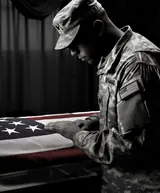
Crisis resources
If you or a veteran is in crisis
Asking for help is not weakness. Reaching another person during a difficult moment can be the first step toward getting through it.
Connect with trained crisis responders through the Veterans Crisis Line.
Veterans and those concerned about a veteran can connect with trained crisis responders.
If someone is in immediate danger or experiencing a medical emergency.
Understanding the numbers
One of the most common questions about this issue is: How many veterans die by suicide each day? The answer depends on the data source and what is being measured.
According to VA's 2026 veteran suicide findings in the 2026 National Veteran Suicide Prevention Annual Report, 6,488 veterans died by suicide in 2024, an average of approximately 17.7 per day. This is the latest VA-reported daily average and is based on 2024 data. For historical comparison, the VA reported 6,398 deaths, or approximately 17.5 per day, in 2023. The number has changed over time as veteran population levels, suicide deaths and reporting methodologies have changed.
The phrase 22 veteran suicides per day became widely recognized after earlier VA research estimated approximately 22 veteran suicide deaths each day. That figure helped bring national attention to veteran suicide, but it should not be treated as the current official estimate. Today's VA data places the documented number closer to 17 veteran suicides per day. The continued popularity of the phrase "22 veteran suicides per day" shows how deeply that statistic became associated with veteran suicide awareness, even as newer national data has become available.
The VA's 2026 National Veteran Suicide Prevention Annual Report counted 6,488 veteran suicide deaths in 2024, an average of 17.7 per day, as summarized in the VA's September 2026 announcement of the report.
America's Warrior Partnership's Operation Deep Dive research estimates that at least 44 former service members die each day when both suicide and self-injury mortality are included. That estimate was extrapolated nationally from five years of data in eight states.
The figures measure different populations, periods, and categories of death. They should not be presented as interchangeable counts.
| Category | Department of Veterans Affairs | America's Warrior Partnership |
|---|---|---|
| Reported daily figure | 17.7 | At least 44 estimated |
| Research period | Calendar year 2024 | Earlier multi-year research, including 2014–2018 |
| Geographic scope | Nationwide death records | Eight-state research with national extrapolation |
| Death classification | Officially classified suicide deaths | Suicide plus self-injury mortality |
| Research method | National mortality reporting and veteran identification | State death records linked with military-service information and additional analysis |
Self-injury mortality, often abbreviated SIM, is a broader research category that can include certain deaths classified as accidental or undetermined, particularly some overdose deaths. Researchers use this category to investigate deaths that may not appear in official suicide statistics. The Operation Deep Dive interim report describes the study's methods and definitions.
Operation Deep Dive estimated approximately 24 daily suicide deaths and approximately 20 daily self-injury mortality deaths under its national extrapolation. These are research estimates, not official nationwide VA suicide counts.
Not necessarily. The VA and Operation Deep Dive measure different populations and categories of death. The independent research raises important questions about identification, classification, undercounting, and potentially preventable deaths. Both sources contribute to understanding the crisis, but neither figure should be presented as an interchangeable count of officially confirmed veteran suicides in 2024. These differences were part of a recent national discussion about veteran suicide at the Military Influencer Conference.
Whether the number being discussed is 17.7 veteran suicides per day, 22 veteran suicides per day or 44 veteran suicides per day, every death represents a person, a family and a community affected by suicide.
The rate
The veteran suicide rate continues to be substantially higher than that of the broader U.S. adult population.
The most recent rates verified on this page come from VA data for 2023, when the veteran suicide rate was 35.2 deaths per 100,000 veterans. These are historical figures and are not 2024 rates.
The veteran population has also declined significantly over the past two decades, making it important to look at both the total number of deaths and the suicide rate when evaluating changes in the veteran suicide crisis.
A lower number of deaths does not necessarily mean the underlying risk has disappeared.
Veteran suicide prevention efforts must continue addressing the conditions that increase suicide risk while strengthening the factors that help veterans remain connected, supported and hopeful.
Historical: 2023 veteran suicide rate
Accessible text equivalent of the historical veteran suicide rate chart: in 2023 the overall veteran suicide rate was 35.2 deaths per 100,000 veterans, 37.8 per 100,000 among male veterans and 13.9 per 100,000 among female veterans (VA 2025 National Veteran Suicide Prevention Annual Report, covering 2023 deaths). Verified 2024 rates from the 2026 report will be added once confirmed.
Causes
There is no single explanation for veteran suicide. The veteran suicide causes frequently discussed by researchers are better understood as interconnected risk factors and life circumstances that can increase vulnerability. A veteran may experience several challenges at the same time. For more background, see CDC research on suicide risk and protective factors.
None of these factors automatically means that someone will attempt suicide. Veteran suicide is complex, and every person's circumstances are different. Effective veteran suicide prevention focuses on recognizing risk early while strengthening protective factors such as relationships, purpose, access to care, economic stability and meaningful community connection.
Mental health
Conversations about veteran mental health often focus on PTSD and traumatic brain injury, but veteran suicide should not be reduced to a single diagnosis.
Many veterans experiencing suicidal thoughts may be dealing with combinations of emotional, physical, financial, family or social challenges.
For some veterans, chronic pain may become overwhelming. Others may experience difficulty adjusting after leaving military service. Some lose the close relationships, daily structure and sense of mission that existed while they were serving.
Others may never seek formal mental health treatment.
That is one reason community-based veteran suicide prevention matters.
The VA's 2026 report found that 62% of veterans who died by suicide in 2024 had not received VA health care during the year of death or the prior year.
Reaching those veterans requires approaches that extend beyond hospitals and clinics and into the places veterans actually live, work and interact.
Connection
Connection can be a powerful protective factor. CDC research on social connection describes how supportive relationships and community belonging can improve health and well-being.
Military service often creates strong relationships built around shared experiences, teamwork, responsibility and mission.
After leaving the military, some veterans struggle to replace those connections.
Isolation can gradually increase. A veteran may stop attending events, communicating with friends or asking for help. Employment changes, relationship problems, disability, chronic pain or relocation can make isolation worse.
Effective veteran suicide prevention must therefore focus not only on crisis intervention but also on rebuilding meaningful relationships before a crisis develops. Red Star Foundation's veteran peer-to-peer support network helps veterans build those relationships at the community level.
Sometimes one trusted person asking one direct question can open a conversation that changes someone's life.
Warning signs
Recognizing warning signs may help someone intervene before a situation becomes more dangerous.
Warning signs should always be taken seriously. If you believe a veteran may be considering suicide, ask directly whether they are thinking about suicide. Listening without judgment and connecting the person with immediate support can make a difference.
Crisis resources
If you or a veteran is in crisis
Connect with trained crisis responders through the Veterans Crisis Line.
Veterans and those concerned about a veteran can connect with trained crisis responders.
If someone is in immediate danger or experiencing a medical emergency.
Get help
If you or someone you know needs veteran suicide help, immediate support is available.
Asking for help is not weakness. Reaching another person during a difficult moment can be the first step toward getting through it.
Support
Reliable veteran suicide resources can help veterans, families and communities understand suicide risk and identify options for support. Important resources include:
Family and caregiver support networks
Resources for suicide loss survivors
No single program can solve the veteran suicide crisis. A comprehensive prevention strategy requires collaboration between government agencies, nonprofits, health care providers, veteran organizations, families and communities.
Prevention
Veteran suicide prevention must begin long before someone reaches the point of attempting suicide. Prevention can include:
Preventing veteran suicide is a shared responsibility. Family members, friends and fellow veterans often recognize behavioral changes before anyone else does. Communities must be equipped to recognize those signs and know what to do next. CDC suicide prevention guidance outlines community strategies that can help. Taking the Red Star Pledge is one simple way to start that conversation.
In crisis now? Call 988, then press 1, or text 838255. See all crisis options.
Read the veteran suicide prevention guide for the steps a concerned person can take, how to check in, and how to help someone reach qualified support.
Our approach
Red Star Foundation works to prevent suicide among current military, veterans, and first responders while supporting families who have lost someone they love to suicide. Our approach centers on three principles: Hope. Recognition. Connection. We believe suicide prevention is strengthened when people remain connected to individuals and communities they trust. We also believe families affected by suicide deserve recognition and continued support. Through Red Star Foundation suicide prevention programs and initiatives, Red Star Foundation works to increase veteran suicide awareness, encourage conversations, strengthen peer relationships and recognize the families whose lives have been forever changed by suicide.
The Red Star Pledge encourages veterans and others to make a simple but potentially life-saving commitment: Talk to someone before making an irreversible decision. A conversation may not solve every problem, but it can create time, connection and another opportunity to find help. The pledge is designed to normalize conversations about suicide and encourage people to reach someone they trust before acting during a moment of crisis.
Learn more about Red Star PledgeVeterans often understand other veterans in ways that can be difficult to replicate. Shared experiences can build trust and make conversations easier. Red Star Foundation's Peer-to-Peer Network is designed around connection at the community level, helping veterans build relationships and strengthening the human networks that can identify isolation and distress earlier. Peer support is not a replacement for professional mental health treatment. It is another layer of connection that can help ensure veterans do not face difficult periods alone.
Learn more about Peer-to-Peer ConnectionBehind every veteran suicide statistic is a human story. Red Star Voices gives families affected by suicide an opportunity to share those stories. These conversations help people understand that veteran suicide is not simply a number on a government report. Every loss affects parents, spouses, children, siblings, friends, coworkers and entire communities. Sharing these experiences can increase veteran suicide awareness, reduce stigma and encourage conversations that might otherwise never occur.
Learn more about Red Star VoicesFamilies who lose a loved one to suicide often experience a type of grief that is difficult for others to understand. The Red Star Service Banner and Red Star Service Pin provide visible recognition for families of current military, veterans, and first responders who died by suicide. These symbols acknowledge the person who was lost while recognizing the family that continues carrying that loss. Recognition is an important part of Red Star Foundation's mission because suicide should never erase a person's service or leave a family feeling forgotten. Red Star Foundation also supports the Red Star Service Banner Act, H.R. 7815, a bill introduced in Congress in March 2026 that has not yet passed.
Learn more about Red Star Service Banner and Red Star Service PinThe Veterans Suicide Awareness Ribbon was created to increase awareness of veteran suicide and encourage conversations about prevention. Awareness alone is not enough, but awareness can lead to conversation. Conversation can lead to connection. Connection can lead someone toward help. The goal is to turn veteran suicide awareness into action.
Learn more about Veterans Suicide Awareness RibbonTake action
You do not need to be a mental health professional to make a difference. You can help by:
One call, one conversation or one act of connection may matter more than you realize. Families who have lost a loved one to suicide can also request a free Red Star Service Banner.
FAQ
The Department of Veterans Affairs' 2026 annual report found that an average of 17.7 veterans died by suicide each day in 2024, the latest year of mortality data available in that report. This represents 6,488 veteran suicide deaths during the year.
According to the 2026 National Veteran Suicide Prevention Annual Report, 6,488 veterans died by suicide in 2024, compared with 6,398 in 2023.
The latest VA report is the 2026 National Veteran Suicide Prevention Annual Report, released September 30, 2026. It examines veteran suicide through calendar year 2024.
America's Warrior Partnership's Operation Deep Dive estimated at least 44 former service member deaths per day nationally when combining suicide and self-injury mortality. Its research uses a broader definition and different methods and years than the VA's official count. The two figures are not directly interchangeable.
The VA calculates its daily average using officially classified veteran suicide deaths identified through national mortality data. Its 2026 report counted 6,488 such deaths in 2024, averaging approximately 17.7 per day.
According to the VA's September 2026 findings, 62% of veterans who died by suicide in 2024 were not receiving VA health care during the year they died or the prior year.
Many veterans are not enrolled in or receiving recent VA health care. Community-based outreach, peer relationships, social connection, access to professional services, and family support can help reach people who might otherwise remain isolated.
The widely cited figure of 22 per day came from older VA estimates. The latest VA report estimates 17.7 veteran suicide deaths per day based on 2024 data. Historical figures should not be presented as current statistics.
The most recent verified rates on this page are historical 2023 figures: the VA reported a veteran suicide rate of 35.2 per 100,000 veterans in 2023, 37.8 per 100,000 among male veterans and 13.9 per 100,000 among female veterans.
Risk factors can include depression, PTSD, chronic pain, substance misuse, financial stress, relationship problems, housing instability, loneliness, and social isolation. Suicide is complex and typically involves multiple interacting factors.
Possible warning signs include expressions of hopelessness, talking about death, withdrawal, increased substance use, extreme mood changes, reckless behavior, giving away possessions or saying that others would be better off without them.
Ask directly and calmly about suicidal thoughts, listen without judgment, and help connect the person with immediate support. Veterans and people concerned about them can call 988 and press 1 or text 838255 to reach the Veterans Crisis Line. Call 911 for immediate danger.
Suicide can be preventable. CDC prevention strategies include strengthening social connection, improving access to mental health care, identifying risk earlier, addressing housing and financial instability, treating health conditions and chronic pain, strengthening peer networks and reducing access to lethal means during periods of elevated risk.
Hope. Recognition. Connection.
Veteran suicide cannot be reduced to 17 veteran suicides per day, 22 veteran suicides per day or 44 veteran suicides per day.
Every number represents a person.
Every person represents relationships.
And every veteran suicide leaves people behind.
Red Star Foundation is working to create a national culture in which veterans remain connected, families affected by suicide are recognized and communities have the tools to intervene before another life is lost.
Through veteran suicide prevention, peer-to-peer connection, veteran suicide awareness and support for Red Star Families, we are working toward a future in which fewer families experience this devastating loss.
Hope. Recognition. Connection.
Join Red Star Foundation in the fight against veteran suicide.

Transparency
The Red Star Foundation is proud to have achieved the Platinum Seal of Transparency. The highest level of transparency from GuideStar, the world’s largest source of nonprofit information. This prestigious recognition highlights the Foundation’s commitment to openness, accountability, and trustworthiness in its mission to combat veteran suicide and provide support to families of military and veteran suicides.
The Platinum Seal of Transparency reflects the Red Star Foundation’s dedication to sharing clear and comprehensive information about its programs, financials, and impact. It demonstrates that the organization adheres to the highest standards of transparency, ensuring donors, partners, and stakeholders can confidently support its vital work.
This milestone is another step forward in the Foundation’s efforts to honor and support those who have served our nation and their families during times of crisis.
Citations
The main reports and resources cited on this page:
Stay connected
Stay connected with our Red Star Foundation community advocates by joining our mailing list for our quarterly newsletter and events.
Take the next step
Every veteran's life matters. Stand with us to reduce veteran suicide and bring hope to those who need it most.