
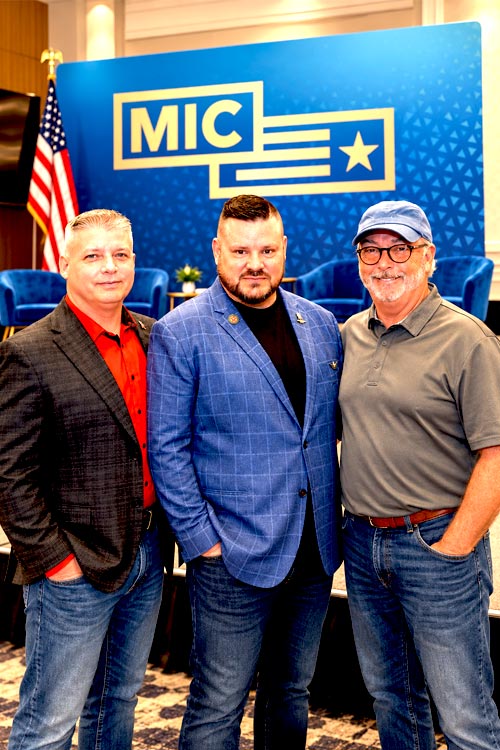
Photo by Bob Vincent
Tampa, FL — Three organizations serving veterans and military families came together at the Military Influencer Conference to confront one of the most difficult issues facing the veteran community: suicide.
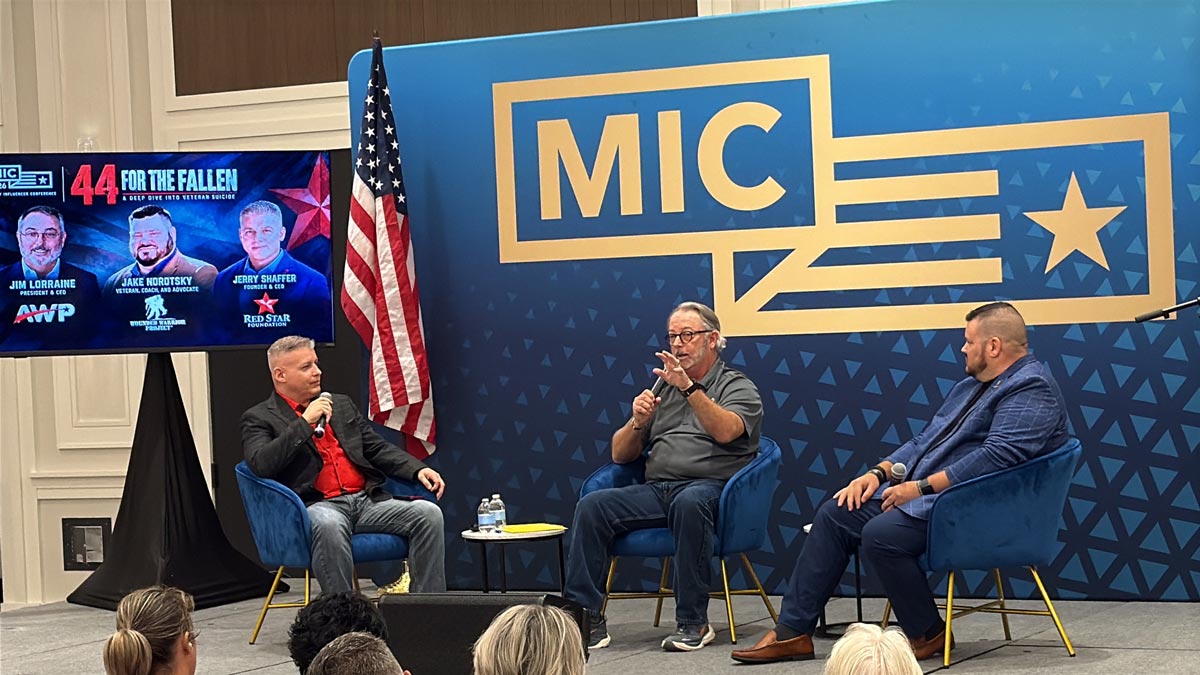
Red Star Foundation, America’s Warrior Partnership and Wounded Warrior Project joined forces for a Sept. 25 panel titled “44 for the Fallen | A Deep Dive Into Veteran Suicide,” examining whether the nation is accurately measuring veteran suicide, why traditional prevention efforts may be reaching people too late and what more can be done for families left behind.
The discussion featured Jerry Shaffer of Red Star Foundation, Jim Lorraine of America’s Warrior Partnership and Jake Norotsky of Wounded Warrior Project.
The panel began by challenging one of the most familiar statistics in the veteran community: 22 veteran suicides per day.
America’s Warrior Partnership has examined data suggesting the number of veterans lost to suicide may be substantially higher, prompting the panel’s use of “44 for the Fallen” and a broader discussion about veterans who may not be captured in commonly cited suicide statistics.
The central question was not simply whether the number is 17, 22 or 44. It was whether the United States can develop effective suicide-prevention strategies without fully understanding how many veterans are being lost and which populations are being missed.
“We cannot adequately solve a problem if we do not accurately understand its size or who is being lost,” the panel framework stated.
Beyond the Statistics
The discussion quickly shifted from numbers to the people behind them.
Norotsky brought a personal perspective to the conversation, having lost his father and friends to suicide and having experienced suicidal ideation himself.
The panel explored factors that can precede a suicidal crisis, including isolation, loss of purpose, difficulty transitioning from military life, feeling like a burden and disconnection from other people.
That led to one of the session’s central challenges to the existing suicide-prevention model: Are communities waiting until veterans identify themselves as suicidal before intervening?
Panelists discussed why friends, family members, peers and community organizations may need to recognize changes and create connections before a veteran reaches a mental health emergency.
The discussion also emphasized that many people experiencing serious emotional distress may never independently seek assistance.
That means prevention cannot depend solely on someone asking for help.
The panel instead focused on building relationships early, identifying changes in behavior and maintaining the kinds of social connections that can help interrupt isolation before it becomes a crisis.
Families Must Be Part of Veteran Suicide Prevention
A major portion of the discussion focused on people who often receive less attention in conversations about veteran suicide: spouses and families.
“Veteran suicide doesn’t occur in isolation,” the panel notes stated. “There are spouses, children, parents, friends and entire communities living around that individual.”
The discussion cited Department of Defense data showing 98 military spouse suicides in 2023 while also noting the difficulty of tracking suicide among veteran spouses once families leave the military system.
Lorraine addressed the importance of extending suicide prevention beyond the individual veteran and into the family and community. Family members may also see warning signs before a government agency, nonprofit or health care provider ever does.
The panel argued that giving families stronger connections to resources could create additional opportunities for intervention.
Prevention Before Crisis
Each organization outlined a different part of what earlier intervention can look like.
America’s Warrior Partnership discussed community integration, identifying needs, helping veterans navigate services, addressing factors contributing to instability and encouraging organizations to work together rather than operate independently.
Wounded Warrior Project’s discussion included peer support, mental wellness, purpose and programs such as Project Odyssey, Warrior Care Network and WWP Talk.
Red Star Foundation focused on peer-to-peer connection, community engagement, experiences that bring veterans together, involving friends and family in prevention, and addressing loneliness, purpose and belonging.
Together, those approaches raised a larger question:
Should suicide prevention begin long before someone becomes suicidal?
Rather than defining prevention primarily as an emergency response, the panel explored a model in which preventing isolation, restoring purpose, maintaining relationships and connecting people with resources are themselves forms of suicide prevention.
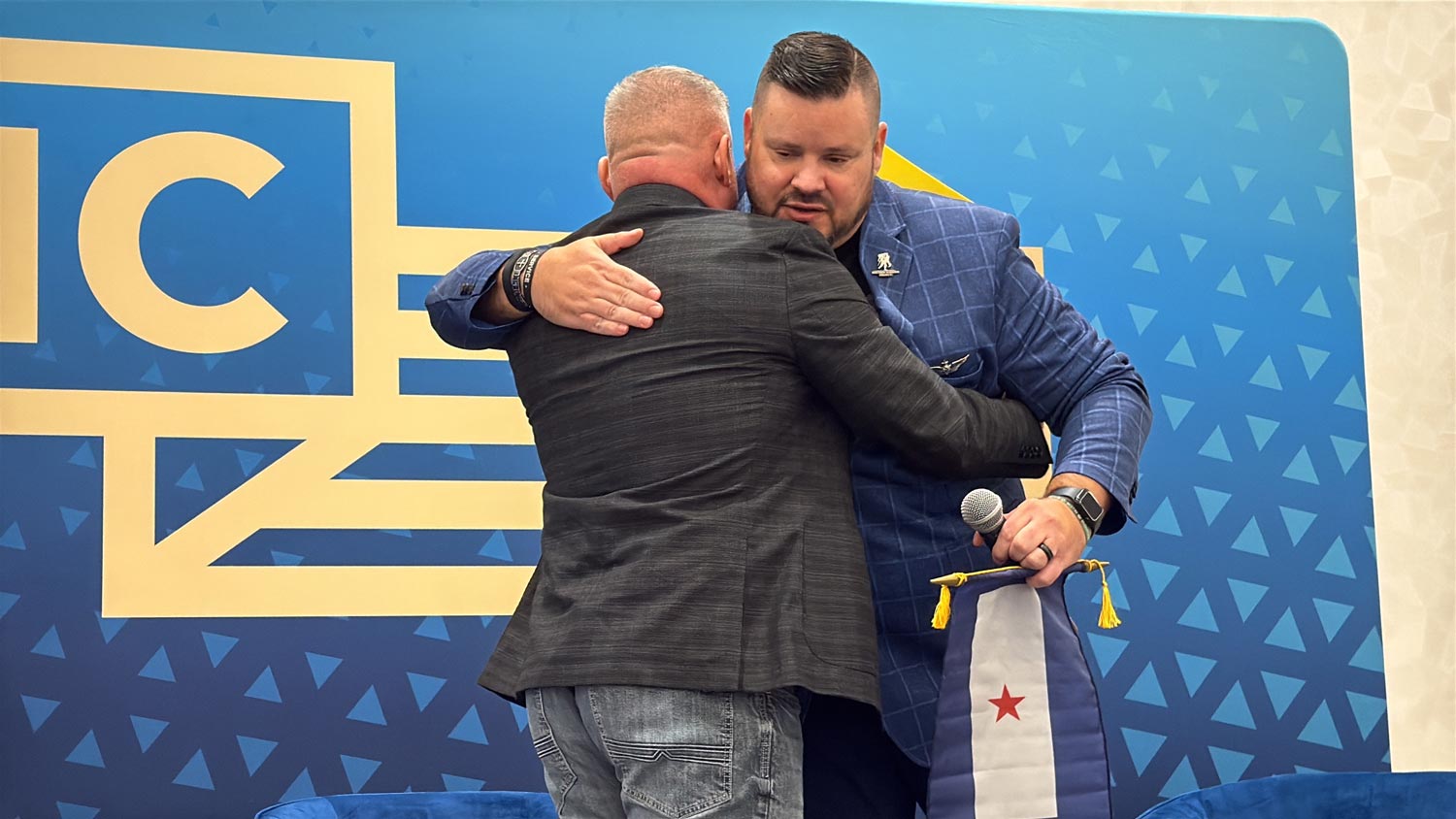
For Red Star Foundation, the issue is central to its work with families who have experienced suicide loss. The organization discussed Red Star Families, the Red Star Service Banner and Pin, Red Star Voices and efforts to provide recognition after suicide while reducing the stigma and shame that can surround suicide loss.
The panel also challenged veteran and mental health organizations to examine whether enough is being done for families after a veteran dies.
Where Veteran Suicide Prevention Is Falling Short
The discussion became particularly direct when panelists examined areas where the veteran-support community continues to struggle.
Among the issues identified were incomplete data, waiting until a veteran reaches crisis, organizations operating in silos, failing to sufficiently involve families, inadequate follow-up, stigma, transition difficulties, isolation, loss of identity and purpose, challenges in rural communities and insufficient postvention support.
A Call to the Military Influencer Community
The Military Influencer Conference brings together veterans, military families, nonprofits, businesses, creators, advocates and others with significant platforms inside the military-connected community.
Panelists challenged attendees to use those platforms in several ways. Organizations were encouraged to collaborate and connect existing programs rather than automatically creating new ones.
Advocates were urged to elevate veteran suicide, military and veteran spouse suicide and family support with policymakers and community leaders. Creators were encouraged to tell stories involving struggle, recovery, loss and hope responsibly.
Businesses were challenged to invest in prevention, research, peer support, family programs and community-based solutions.
Shaffer returned to Norotsky’s experience losing his father as a teenager and the reality that every suicide extends far beyond the individual who dies.
“A suicide doesn’t affect one person,” the panel notes stated. “Its impact continues through sons and daughters, husbands and wives, parents, friends and communities.”
The session closed with a Red Star Banner presentation and a final message intended to move the conversation beyond statistics: “44 isn’t just a number. Every number has a name. Every name has a family. And every one of us has a role in changing what comes next.”
For Red Star Foundation, America’s Warrior Partnership and Wounded Warrior Project, the discussion underscored a growing argument within the veteran community: reducing veteran suicide will require more than crisis intervention.
It will require more accurate data, earlier engagement, stronger relationships, greater involvement from families, better coordination among organizations and continued support for the people left behind.
Filed under: Veteran Suicide · Military Influencer Conference · Wounded Warrior Project · America’s Warrior Partnership · Suicide Prevention · Red Star Families · Red Star Foundation
All news