
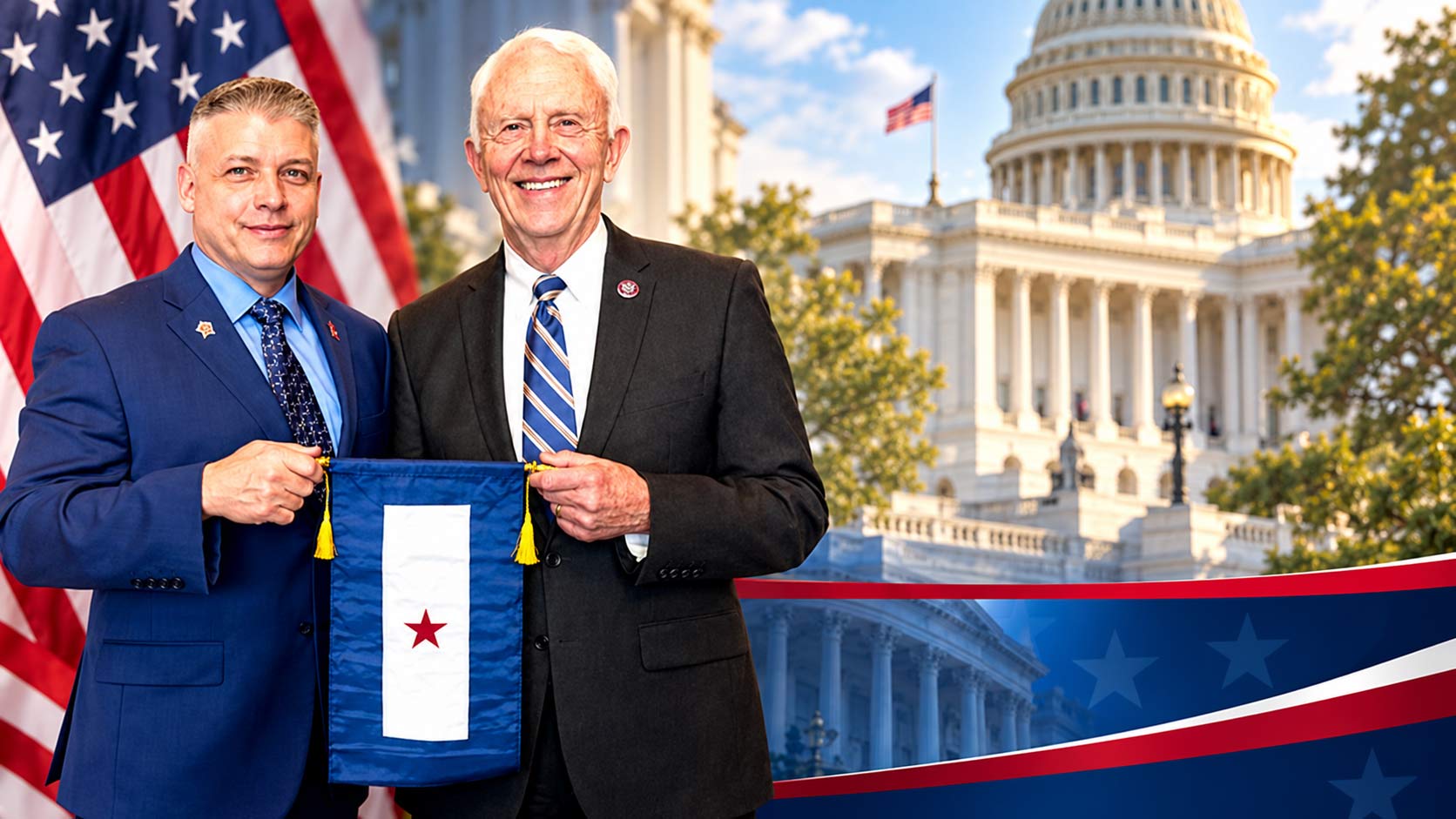
WASHINGTON, D.C. | Support for the Red Star Service Banner continues to grow in Congress. H.R. 7815, the Red Star Service Banner Act, now has 35 cosponsors in the U.S. House of Representatives, bringing the total number of House members behind the bill to 36 when primary sponsor Rep. Jack Bergman of Michigan is included. The legislation would formally recognize families who have lost a current military member, veteran or first responder to suicide, a step the Red Star Foundation sees as part of the national response to veteran suicide.
The newest cosponsors are Rep. Clay Fuller of Georgia and Rep. Nicholas Langworthy of New York.
The Red Star Foundation created the Red Star Service Banner and has worked alongside families and lawmakers since the banner's first recognition in Congress less than two years ago.
What is H.R. 7815?
H.R. 7815, the Red Star Service Banner Act, is federal legislation introduced by Rep. Jack Bergman on March 5, 2026. The bill would amend Title 36 of the United States Code to establish the Red Star Service Banner as an officially recognized service banner for families who have lost a current military member, veteran or first responder to suicide.
H.R. 7815 at a Glance
- Bill
- H.R. 7815
- Name
- Red Star Service Banner Act
- Primary Sponsor
- Rep. Jack Bergman (Michigan)
- Introduced
- March 5, 2026
- Cosponsors
- 35
- Total House Members Supporting the Bill
- 36 including the primary sponsor
- Purpose
- To establish the Red Star Service Banner as an officially recognized service banner under Title 36 of the United States Code.
- Status
- Introduced in the House and referred to committee; not yet enacted into law.
H.R. 7815: What the Red Star Service Banner Act Would Do
According to the official bill text published by the U.S. Government Publishing Office, H.R. 7815 would amend Title 36 of the United States Code, the part of federal law that covers patriotic and national observances, symbols and service banners. It would establish the Red Star Service Banner as an officially recognized service banner, alongside the long-standing tradition of Blue Star and Gold Star Service Banners.
The bill was referred to committee after its introduction. It has not passed the House or the Senate.
Red Star Service Banner Gains Bipartisan Support in Congress
Support for H.R. 7815 has continued to expand throughout 2026. The coalition now includes 35 cosponsors in addition to Rep. Jack Bergman, bringing the total number of House members associated with the legislation to 36.
This is not a Republican effort or a Democratic effort. Supporters span numerous states, regions and political viewpoints, united by a shared belief that families affected by suicide deserve to be seen.
Bipartisan Support Continues to Grow
Thirty-five cosponsors have now joined primary sponsor Rep. Jack Bergman in supporting H.R. 7815. Each name links to the member's official House website:
- Jack Bergman (primary sponsor)
- J. Luis Correa
- Gus Bilirakis
- Anna Paulina Luna
- Mike Bost
- Neal Dunn
- Zoe Lofgren
- Steve Cohen
- Deborah Ross
- Mark Harris
- Glenn Grothman
- Wesley Hunt
- Ronny Jackson
- Sheri Biggs
- Sylvia Garcia
- Eleanor Holmes Norton
- Tom Tiffany
- Barry Moore
- Yvette Clarke
- Bonnie Watson Coleman
- Shontel Brown
- Derek Schmidt
- Craig Goldman
- Susie Lee
- Dan Goldman
- Maria Elvira Salazar
- Glenn “GT” Thompson
- Mike Lawler
- Julie Johnson
- Derrick Van Orden
- Diana Harshbarger
- André Carson
- Brittany Pettersen
- Andrea Salinas
- Clay Fuller
- Nicholas Langworthy
From Congressional Recognition to Federal Legislation
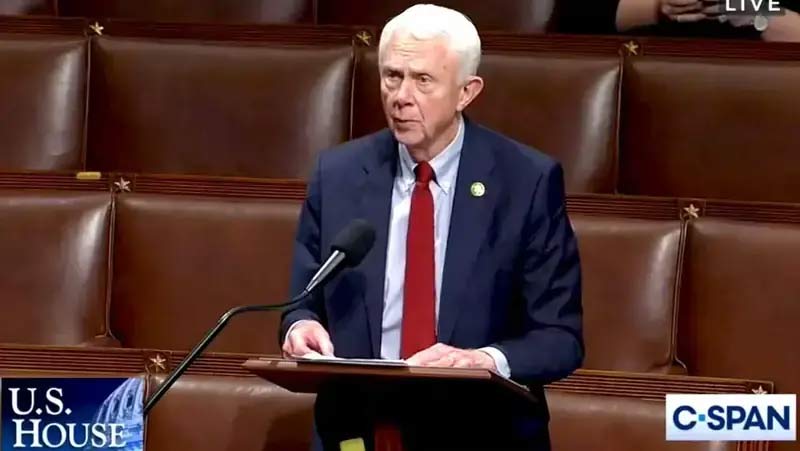
On January 28, 2025, Rep. Jack Bergman marked the Congressional recognition of the Red Star Service Banner by entering remarks about the banner and the Red Star Foundation into the Congressional Record. The remarks appear in the official Congressional Record for January 28, 2025.
During those remarks, Bergman described the Red Star Service Banner hanging in his Capitol Hill office and explained its purpose: recognizing the service of veterans and service members who died by suicide and acknowledging the families left behind.
Just over a year later, on March 5, 2026, the introduction of the Red Star Service Banner Act moved the banner from the Congressional Record to legislation before the United States Congress.
Why the Red Star Service Banner Matters to Families Affected by Veteran Suicide
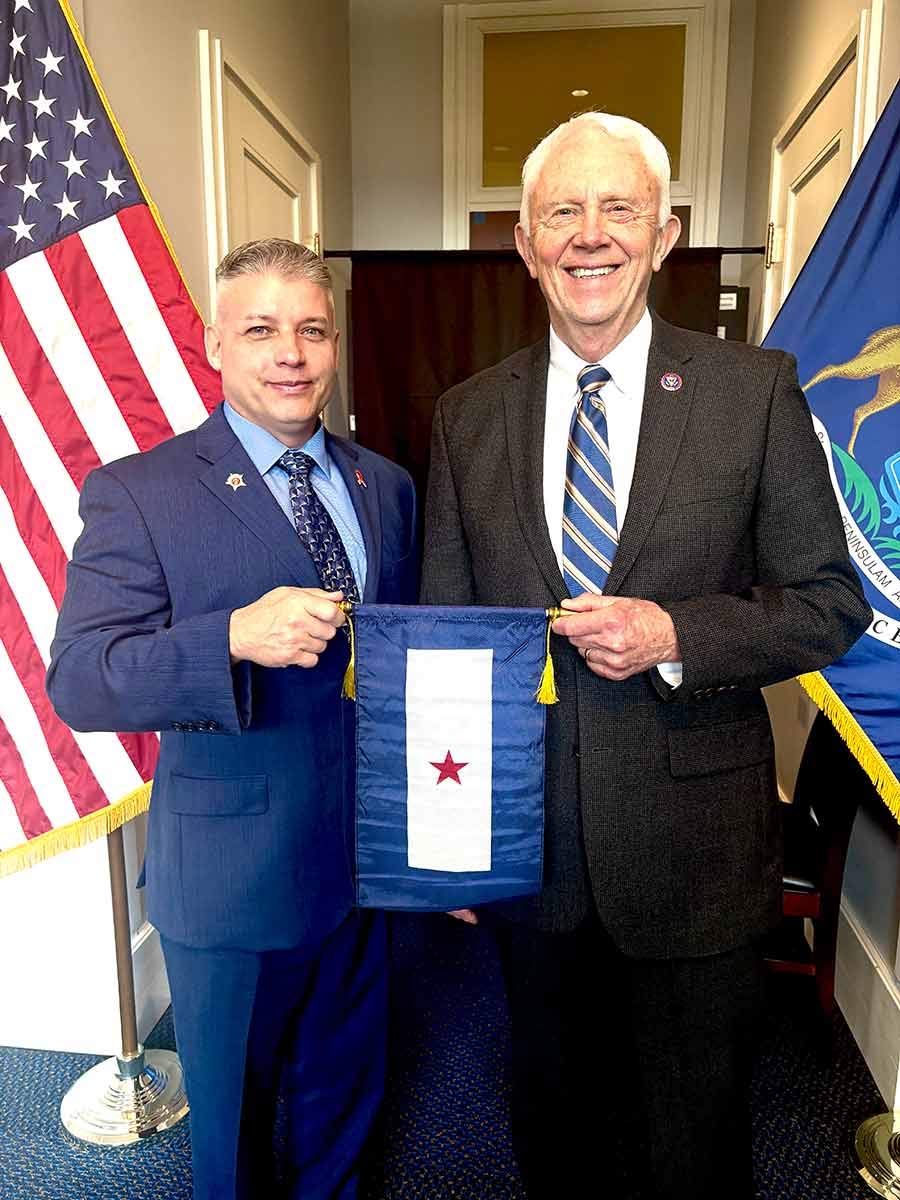
The Red Star Service Banner was created to provide a visible symbol of hope, recognition and connection for families of current military members, veterans and first responders who have lost a loved one to suicide. These are the Red Star Families.
For generations, Blue Star and Gold Star Service Banners have given Americans recognizable symbols of military service and sacrifice. The Red Star Service Banner seeks to ensure another group of families is seen as well: the families left behind after suicide.
In the Red Star Foundation's view, recognition is also part of prevention. Visibility creates conversation, and conversation can reduce stigma and make it easier for people who are struggling to speak openly and seek support before reaching a crisis. The VA's latest veteran suicide findings show why that matters, and our guide to veteran suicide statistics and prevention explains the numbers and where to find help.
Behind every death is a family, fellow veterans and a community whose lives can be permanently changed. By publicly acknowledging those families, the banner helps bring an often-hidden crisis into public view.
Major Veterans and First Responder Organizations Support H.R. 7815
The congressional outreach surrounding H.R. 7815 also identifies support from major military, veteran and first responder organizations:
- Vietnam Veterans of America
- Military Order of the Purple Heart
- America’s Gold Star Families
- Disabled American Veterans
- Marine Corps League
- Association of the United States Navy
- U.S. First Responders Association
Together with growing bipartisan support in Congress, this backing shows that recognition of suicide-loss families is developing into a broader national movement.
Red Star Service Banner Congressional Timeline
January 28, 2025
Rep. Jack Bergman recognizes the Red Star Service Banner and the Red Star Foundation in the Congressional Record.
March 5, 2026
H.R. 7815, the Red Star Service Banner Act, is introduced in the U.S. House of Representatives and referred to committee.
October 2026
H.R. 7815 reaches 35 cosponsors, with 36 House members in total supporting the bill. The bill has not passed and is not law.
What Happens Next for H.R. 7815?
H.R. 7815 has been introduced and is gaining cosponsors, but it has not passed the House or the Senate and has not become law. The Red Star Service Banner is not yet recognized by federal statute. For the bill to become law, it would need to advance through committee, pass both the House and the Senate, and be signed by the President.
Red Star Families Are Becoming Visible
Families do not need to wait for Congress. Any family that has lost a loved one to suicide can request a Red Star Service Banner today, and supporters can learn about other Red Star Foundation programs that serve families and help prevent veteran suicide and military suicide.
With 36 House members now behind the legislation, the Red Star Service Banner is closer than ever to national recognition for the families who carry the weight of suicide loss.
Learn More About the Red Star Service Banner
The Red Star Service Banner is a symbol of hope, recognition and connection for families who have lost a current military member, veteran or first responder to suicide.
Learn About the Red Star Service BannerRequest a Red Star Service Banner
Filed under: Red Star Service Banner · Red Star Service Banner Act · H.R. 7815 · Veteran Suicide Prevention · Red Star Families · Military Suicide
All news